0 · Recall Warm-up
Answer from memory first. Answers are in the Answer Vault at the bottom.
- Decoder outputs are? from Lesson 5.2.2
- Any function from a decoder needs which extra gate? from Lesson 5.2.2
- Minimal SOP shares terms how? from Lesson 4.1.2
1 · The Hook
🎣
Instead of wiring gates for each new function, why not store the truth table in a memory and look the answer up? That is a ROM. If the truth table is huge but the function has few product terms, a PLA stores only the product terms. GATE asks the size of the ROM needed for a function, and how many product terms a PLA needs.
2 · Predict First
🤔
A function has 4 inputs and 3 outputs. If we store its whole truth table in a memory, how many rows and how many bits per row?
Make a guess in your head. The answer opens Section 3.
3 · Core Concept
💡
Predict First — the answer
2⁴ = 16 rows, 3 bits per row (48 bits in all).
🗣️
In plain words
A ROM is a decoder (making every minterm) followed by a programmable OR array: each output ORs the minterms where it is 1. Its size depends only on the number of inputs and outputs. A PLA has a programmable AND array (making just the product terms you need) followed by a programmable OR array, so it is small when the functions share a few product terms.
1. ROM
- n inputs, m outputs → 2ⁿ words of m bits (a 2ⁿ × m ROM).
- Any functions of the n inputs fit, no minimisation needed.
- Example: a ROM that outputs the square of a 4-bit number needs 4 inputs and 8 output bits (15² = 225 < 256) → 16 × 8.
- Example: an 8-bit + 8-bit adder with carry-in as a ROM: 17 inputs, 9 outputs → 2¹⁷ × 9: lookup tables grow exponentially.
2. PLA (programmable logic array)
- Programmable AND array (product terms) + programmable OR array (sums).
- Size is described as inputs × product terms × outputs; product terms can be shared between outputs.
- To use few product terms, minimise the functions together and reuse common terms (sometimes a function's complement is cheaper).
Example: F₁ = AB + AC, F₂ = AB + BC → distinct products AB, AC, BC: 3 product terms (AB shared).
3. PAL (programmable array logic)
Programmable AND array, fixed OR array (each output gets its own few product terms; no sharing). Cheaper and faster than a PLA, less flexible.
| Device | AND array | OR array |
|---|---|---|
| ROM | fixed (full decoder) | programmable |
| PLA | programmable | programmable |
| PAL | programmable | fixed |
4 · Visual
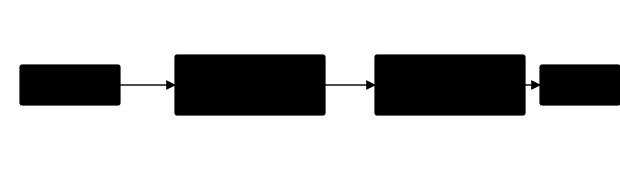
The common shape of ROM, PLA and PAL: which array is fixed and which is programmable makes the difference.
5 · Worked Examples
Example 1 Easy
What size ROM implements 3 functions of 5 variables?
Solution
2⁵ × 3 = 32 × 3.
Example 2 Medium
F₁ = AB + A'C and F₂ = AB + BC' are put in a PLA. How many product terms are needed?
Solution
AB, A'C, BC' → 3 (AB shared).
Example 3 GATE
A ROM converts a 4-bit binary number into its 2-digit BCD form (0–15 → 00–15). What size is it?
Solution
4 inputs. The tens digit is only ever 0 or 1 (1 bit) and the units digit needs 4 bits, so 5 output bits → a 16 × 5 ROM.
6 · GATE Traps
⚠️
- ROM size depends on inputs and outputs only: 2ⁿ × m.
- PLA counts distinct product terms across all outputs.
- PAL's OR array is fixed: no sharing of product terms between outputs.
- ROM never needs minimisation.
7 · Memory Hook
🧠
"ROM: fixed AND (all minterms), programmable OR, 2ⁿ × m. PLA: both programmable, share products. PAL: OR fixed."
8 · Connect the Dots
Phase 5 is complete: every combinational building block. Phase 6 adds memory: latches and flip-flops, then counters and state machines, where outputs depend on the past as well as the present.
9 · Self-Test
GATE format. Try every question before opening the vault.
Q1NAT1 markROM size
How many bits does a ROM implementing 4 functions of 6 variables store?
Numerical answer: ________
Q2NAT2 marksROM squarer
A ROM gives the square of a 5-bit unsigned input. How many output bits does each word need?
Numerical answer: ________
Q3NAT2 marksPLA
F₁ = AB + AC and F₂ = AB + BC are realised in a PLA. How many product terms?
Numerical answer: ________
Q4MCQ1 markDevices
Which device has a programmable AND array and a fixed OR array?
- (A) ROM
- (B) Decoder
- (C) PLA
- (D) PAL
Q5MCQ1 markROM
A ROM's AND part is:
- (A) a priority encoder
- (B) a multiplexer tree
- (C) a full decoder generating every minterm
- (D) a programmable set of product terms
10 · Rule Card
- ROM: fixed AND (decoder), programmable OR; size 2ⁿ × m bits.
- PLA: programmable AND and OR; count distinct product terms; share terms between outputs.
- PAL: programmable AND, fixed OR (no sharing).
11 · Concept Ledger
Unlocked in this lesson. From here on, these terms may be used.
read-only memory as logicROM sizelookup tablesprogrammable logic arrayproduct-term sharingprogrammable array logicfixed vs programmable arrays
12 · Answer Vault
Answer Vault
Try the questions first. Open when you are ready to check.
Recall Warm-up
- The minterms of the inputs.
- An OR gate per output.
- Each product term is one AND.
Self-Test
Q1 Answer: 2561 mark
2⁶ × 4.
Re-read: Lesson 5.2.3 — ROMs and PLAs: programmable logic
Q2 Answer: 102 marks
31² = 961 < 1024.
Re-read: Lesson 5.2.3 — ROMs and PLAs: programmable logic
Q3 Answer: 32 marks
AB, AC, BC.
Re-read: Lesson 5.2.3 — ROMs and PLAs: programmable logic
Q4 Answer: (D)1 mark
That is the definition of PAL.
- (A) is wrong: AND array fixed.
- (B) is wrong: Not programmable.
- (C) is wrong: Both programmable.
Re-read: Lesson 5.2.3 — ROMs and PLAs: programmable logic
Q5 Answer: (C)1 mark
Fixed: all 2ⁿ minterms.
- (A) is wrong: No.
- (B) is wrong: No.
- (D) is wrong: That is a PLA/PAL.
Re-read: Lesson 5.2.3 — ROMs and PLAs: programmable logic